
Vitamin D3 + K2 Side Effects: What to Expect & Who Should Avoid It

healthy adults, this combo is well tolerated when used as directed. However, some people may experience side effects—usually related to dose, existing health conditions, or medication interactions.
This guide explains the most common vitamin D3 + K2 side effects, how to lower the risk, and who should be cautious.
Disclaimer: This content is for educational purposes only and is not medical advice.
Quick answer: Are D3 + K2 supplements safe?
For most people, yes—especially at moderate doses. Side effects are more likely when:
- the vitamin D dose is high (e.g., 5,000 IU daily for long periods)
- you already have high calcium levels
- you have kidney issues
- you take certain medications (especially blood thinners)
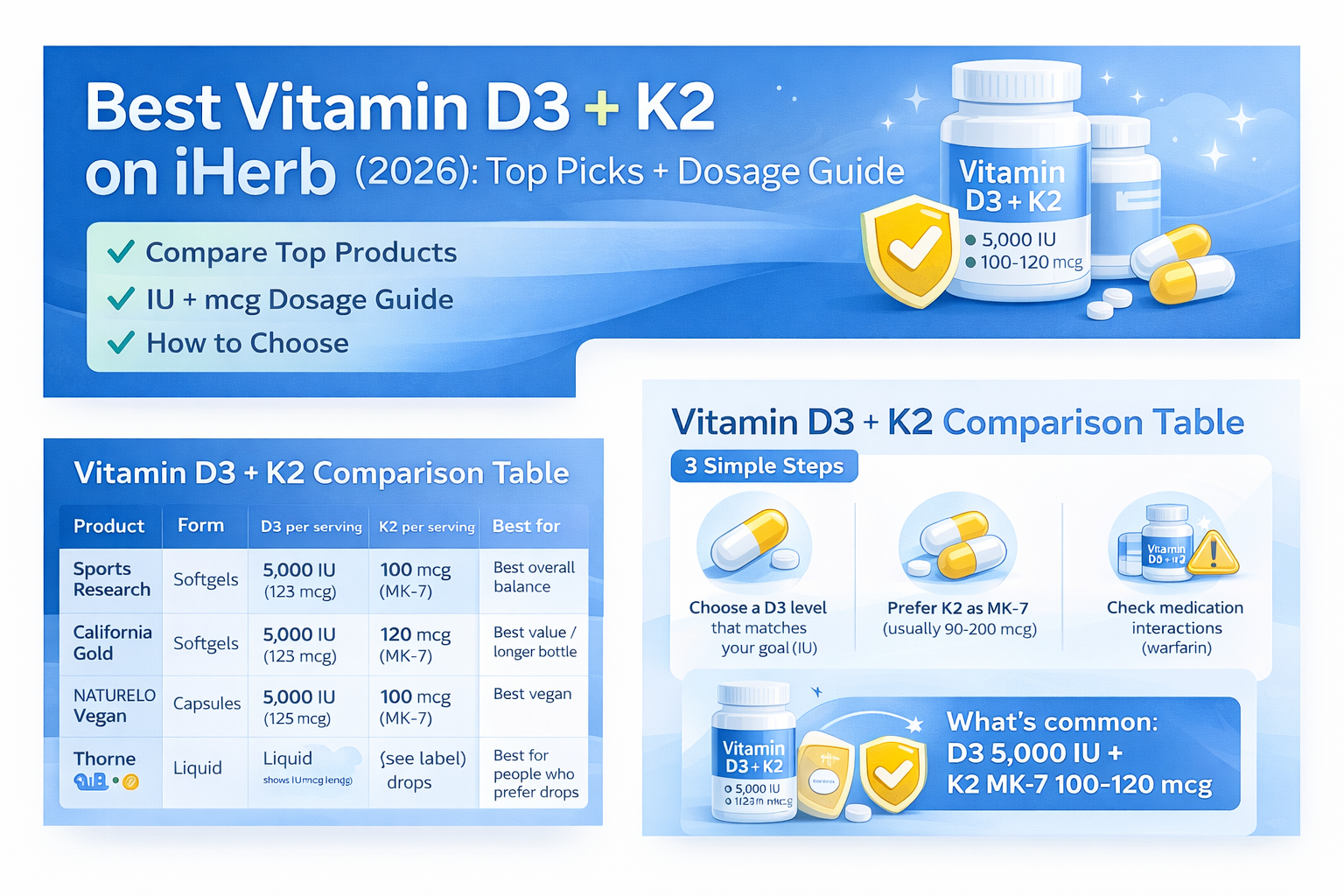
Want a high-quality D3 + K2 option?
Common Vitamin D3 + K2 Side Effects (Mild)
These are usually mild and often improve by adjusting the dose or timing.
1) Stomach discomfort
Some users report mild nausea or stomach upset—especially when taking supplements on an empty stomach.
What helps: Take D3 + K2 with a meal (preferably containing some fat).
2) Headache (occasionally)
A small number of people report headaches, often when starting a higher dose.
What helps: Lower the dose or take it earlier in the day.
3) “Too energized” or sleep disruption
Some people feel more alert after vitamin D. If taken late, it may affect sleep.
What helps: Take it in the morning or with lunch.
More Serious Side Effects (Usually From Too Much Vitamin D)
Vitamin D excess can raise calcium levels (hypercalcemia), which can cause stronger symptoms.
Signs to watch for:
- unusual thirst and frequent urination
- constipation
- nausea/vomiting
- weakness or fatigue
- confusion (rare, more severe cases)
If you notice these symptoms—especially on high doses—stop the supplement and consult a healthcare professional.
Side Effects Table (Symptoms + Fix)
| Symptom | Possible cause | What to do |
|---|---|---|
| Mild nausea | taking on empty stomach | take with food |
| Headache | dose too high | lower dose / split dose |
| Sleep issues | taking late | move to morning |
| Constipation | dehydration or high calcium | hydrate, reduce dose |
| Excess thirst/urination | high calcium risk | stop + get medical advice |
Want a high-quality D3 + K2 option?
Who Should Avoid Vitamin D3 + K2 (or Ask a Doctor First)?
Be careful if you:
- take warfarin (Coumadin) or other vitamin K–sensitive blood thinners
(Vitamin K2 can affect how warfarin works—this is important.) - have kidney disease or a history of kidney stones
- have high blood calcium or parathyroid disorders
- are taking high-dose calcium supplements daily
- are pregnant or breastfeeding (ask your clinician)
Medication Interactions (Important)
Vitamin D3 + K2 may interact with:
- warfarin (K2 needs medical supervision)
- some heart and blood pressure medications (depending on your case)
- certain diuretics (may affect calcium balance)
Practical rule: If you take prescription meds daily, ask a clinician before starting high-dose D3 + K2.
How to Reduce Side Effects (Best Practices)
If you want the benefits without issues:
- Start low (especially if you’re new):
Try 1,000–2,000 IU D3 daily and assess how you feel. - Avoid mega-dosing unless guided by labs.
Many combo products use 5,000 IU—great for some, too much for others. - Take it with food (fat helps absorption).
- Don’t stack multiple D supplements (multivitamin + D3 + fortified foods).
- Stay hydrated, especially if you also take minerals like magnesium.
Should You Take D3 + K2 Every Day?
It depends on your dose and your blood levels (25(OH)D).
A common pattern many people use:
- moderate daily dose (1,000–2,000 IU)
or - higher dose (like 5,000 IU) but not necessarily every single day (based on labs).
If you’re unsure, start with a moderate dose and adjust after bloodwork.
Best Time to Take D3 + K2
- Morning or lunch is ideal
- Always with food
- If it bothers your stomach: take it after your largest meal
Want a high-quality D3 + K2 option?
Digestive balance can affect energy, immunity, and comfort. We recently reviewed the best probiotics on iHerb and compared the leading formulas.
Can vitamin D3 + K2 cause anxiety?
Not commonly. If you feel overstimulated, it may be dose-related—try lowering the dose and taking it earlier.
Does K2 cause side effects?
Most people tolerate K2 well, but it’s not recommended to start K2 without guidance if you use warfarin.
How long do side effects last?
Mild effects often improve within a few days after adjusting dose or timing.
Can I take magnesium with D3 + K2?
Many people do. Magnesium supports vitamin D metabolism, but always follow label directions.
Internal links :
- Best Magnesium Glycinate (Top Picks)
- Best Creatine Monohydrate Supplements (Top 5 Picks)
- Best Omega-3 Fish Oil on iHerb: Top 7 Picks (2025)
- Best Collagen Peptides Powder on iHerb (Top 7 Picks)

iHerb Coupon 15% Off for New Customers: How to Use
iHerb Coupon 15% Off for New Customers: How to Use the Code If you are shopping on iHerb for the first…


Best Vitamin C Serums for Brighter, Smoother Skin in 2026
Best vitamin C serum for glowing skin, Smoother Skin in 2026 Vitamin C remains one of the most popular skincare ingredients…

Best iHerb Products for Glowing Skin in 2026
Best iHerb Products for Glowing Skin in 2026 Glowing skin usually comes from a few simple things done consistently: hydration, gentle…

How to Treat Acne on Oily Skin: Best Routine +
How to Treat Acne on Oily Skin: Best Routine + Best iHerb Products If you have oily skin, acne can feel…

Best Fish Oil Supplements on iHerb (2026): 9 Omega-3 Picks
Best Fish Oil Supplements on iHerb (2026): 9 Omega-3 Picks That Are Worth Buying If you’re shopping for the best fish…

Best Chelated Magnesium Glycinate (2026): 7 Gentle, High-Absorption Picks
Best Chelated Magnesium Glycinate (2026): 7 Gentle, High-Absorption Picks Chelated magnesium glycinate (often labeled magnesium glycinate or magnesium bisglycinate) is one…
Pingback: Best Ashwagandha on iHerb (2026): Top Picks for Stress, Sleep & Anxiety
Should I take K2+D3 when I have calcium i my aorta?
If you have **calcium build-up (calcification) in your aorta**:
* **Vitamin D3:** You *can* take it **only if you’re deficient**, and stick to a **moderate dose**. Avoid high doses without labs/doctor oversight because D3 can **raise blood calcium** in some people.
* **Vitamin K2:** It’s **not proven** to treat or reverse aortic calcification. **Do not take K2 if you’re on warfarin (Coumadin)** unless your clinician specifically manages it.
**Best next step:** check **25-OH vitamin D**, **blood calcium**, and **kidney function**, and focus on proven cardiovascular risk control (cholesterol, BP, diabetes, no smoking).
Pingback: Magnesium Glycinate vs Bisglycinate: What’s the Real Difference (and Which Should You Buy)?
Pingback: Best Chelated Magnesium Glycinate (2026): 7 Gentle, High-Absorption Picks
Pingback: Best Fish Oil Supplements on iHerb (2026): 9 Omega-3 Picks That Are Worth Buying