
Magnesium Glycinate vs Citrate for Sleep: Which Is Better?
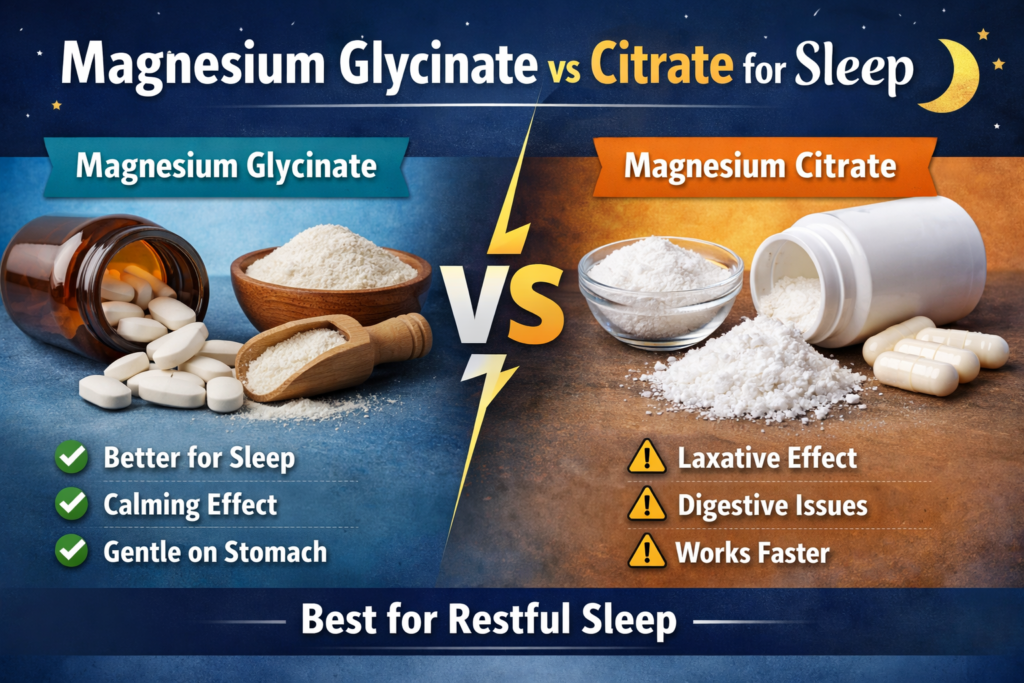
magnesium glycinate vs citrate for sleep
Best magnesium glycinate vs citrate for sleep is a common question for people looking to improve sleep quality naturally…
Magnesium is widely used to support relaxation and better sleep, but choosing the right form can be confusing. Two of the most popular options are magnesium glycinate and magnesium citrate. While both provide magnesium, they work differently in the body.
In this guide, we compare magnesium glycinate vs citrate for sleep, looking at absorption, side effects, and which option is better for improving sleep quality.
Why Magnesium Is Important for Sleep
Magnesium helps regulate:
- Nervous system activity
- Muscle relaxation
- Stress response
Low magnesium levels are often linked to restlessness, muscle tension, and difficulty falling asleep. Supplementing with the right form of magnesium may help support a calmer state before bedtime.
What Is Magnesium Glycinate?
Magnesium glycinate is magnesium bound to glycine, an amino acid known for its calming properties.
Key features:
- Highly absorbable
- Gentle on the stomach
- Less likely to cause digestive issues
Because of these traits, magnesium glycinate is commonly chosen for sleep support and relaxation.
What Is Magnesium Citrate?
Magnesium citrate is magnesium bound to citric acid.
Key features:
- Good absorption
- More likely to stimulate bowel movements
- Often used for constipation relief
While it can help increase magnesium levels, its digestive effects may not be ideal for nighttime use.
Magnesium Glycinate vs Citrate for Sleep (Comparison Table)
| Feature | Magnesium Glycinate | Magnesium Citrate |
|---|---|---|
| Best for sleep | ✅ Yes | ⚠️ Sometimes |
| Absorption | High | Moderate–High |
| Calming effect | Strong | Mild |
| Digestive side effects | Low | Higher |
| Laxative effect | ❌ Rare | ✅ Common |
| Nighttime use | Ideal | Not always |
Which Is Better for Sleep?
For most people focused on sleep quality, magnesium glycinate is the better option.
Why glycinate is preferred:
- Promotes relaxation without digestive disruption
- Supports nervous system balance
- Can be taken nightly without discomfort
Magnesium citrate may still work for sleep in some cases, but its laxative effect can interfere with rest.

Recommended Dosage for Sleep
Magnesium Glycinate
- 200–400 mg elemental magnesium
- Take 30–60 minutes before bed
Magnesium Citrate
- 200–300 mg elemental magnesium
- Best taken earlier in the day if sensitive digestion is an issue
Always check supplement labels for elemental magnesium, not total compound weight.
Side Effects and Tolerance
Both forms are generally safe when used as directed.
Possible side effects:
- Magnesium glycinate: mild drowsiness (desired at night)
- Magnesium citrate: loose stools or stomach discomfort
If digestive sensitivity is a concern, glycinate is usually better tolerated.

Who Should Choose Magnesium Citrate?
Magnesium citrate may be a better option if you:
- Experience occasional constipation
- Prefer a lower-cost magnesium supplement
- Take magnesium earlier in the day, not before bed
For pure sleep support, glycinate still tends to be the preferred choice.
Is magnesium glycinate better than citrate for sleep?
Yes. Magnesium glycinate is generally better for sleep because it supports relaxation without causing digestive side effects.
Can I take magnesium every night?
Many people take magnesium nightly. Consistency often leads to better results over time.
How long does magnesium take to improve sleep?
Some notice relaxation within days, while better sleep quality may take 1–2 weeks of regular use.
Can magnesium citrate help with sleep?
It can help in some cases, but its laxative effect makes it less ideal for bedtime use.
Related on SuppSift
- Magnesium Glycinate Dosage for Sleep
- Best Magnesium Glycinate Supplements on iHerb
- magnesium glycinate vs citrate for sleep
A healthy digestive system supports nutrient absorption. If you’re considering probiotics, here’s our updated comparison of the best probiotics on iHerb.
Final Verdict
When comparing magnesium glycinate vs citrate for sleep, magnesium glycinate is the clear winner for most people. Its calming effect, high absorption, and gentle digestion make it better suited for nighttime use and consistent sleep support.

iHerb Coupon 15% Off for New Customers: How to Use
iHerb Coupon 15% Off for New Customers: How to Use the Code If you are shopping on iHerb for the first…


Best Vitamin C Serums for Brighter, Smoother Skin in 2026
Best vitamin C serum for glowing skin, Smoother Skin in 2026 Vitamin C remains one of the most popular skincare ingredients…

Best iHerb Products for Glowing Skin in 2026
Best iHerb Products for Glowing Skin in 2026 Glowing skin usually comes from a few simple things done consistently: hydration, gentle…

How to Treat Acne on Oily Skin: Best Routine +
How to Treat Acne on Oily Skin: Best Routine + Best iHerb Products If you have oily skin, acne can feel…

Best Fish Oil Supplements on iHerb (2026): 9 Omega-3 Picks
Best Fish Oil Supplements on iHerb (2026): 9 Omega-3 Picks That Are Worth Buying If you’re shopping for the best fish…

Best Chelated Magnesium Glycinate (2026): 7 Gentle, High-Absorption Picks
Best Chelated Magnesium Glycinate (2026): 7 Gentle, High-Absorption Picks Chelated magnesium glycinate (often labeled magnesium glycinate or magnesium bisglycinate) is one…