
Magnesium Glycinate vs Bisglycinate (The Real Truth)
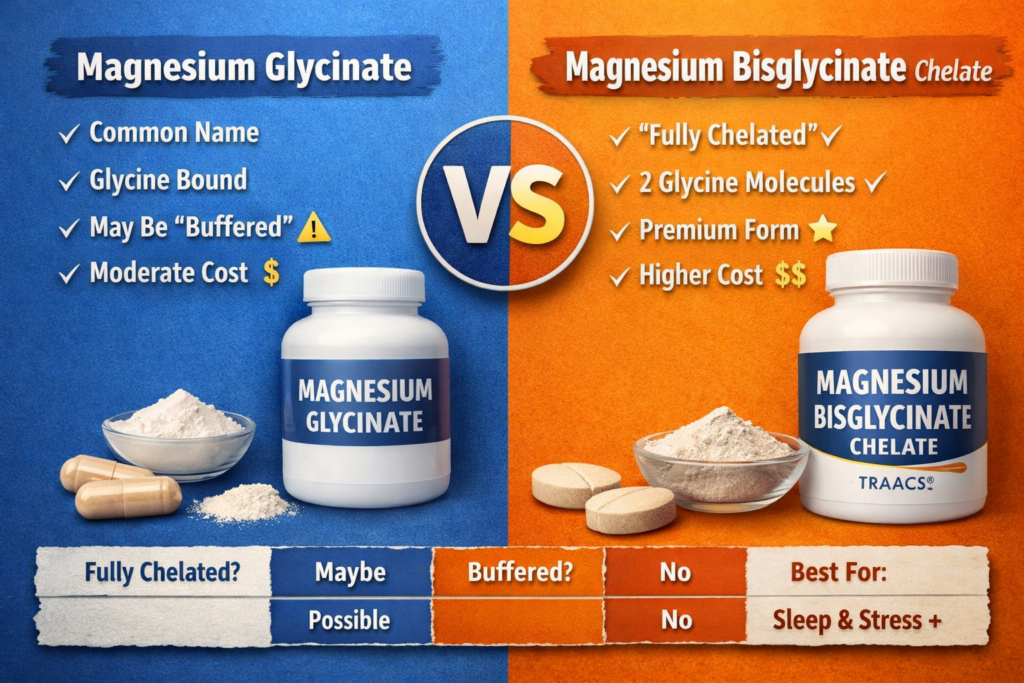
If you’ve been shopping for magnesium to support sleep, stress, muscle relaxation, or gut-friendly supplementation, you’ve likely seen both names:
- Magnesium Glycinate
- Magnesium Bisglycinate (or Bisglycinate Chelate)
Many people assume they’re two different forms. In practice, they’re usually the same compound, and the “difference” is often just labeling—or a clue about quality (fully chelated vs “buffered” blends). Magnesium glycinate is literally magnesium bound to glycine, and the “bis-” commonly refers to magnesium being complexed with two glycine molecules in the chelate form.
So how do you choose the best product? You don’t just pick a name—you learn to read the label like a pro.
If you’re also optimizing your supplement stack, you may like our Omega-3 iHerb guide as another “foundation” supplement
Best Omega-3 Fish Oil on iHerb: Top 7 Picks (2025)
Quick Takeaway (If You’re in a Hurry)
Most of the time:
- Magnesium glycinate = magnesium bisglycinate (same idea, different naming conventions).
What matters more than the name: - Whether it’s fully chelated / fully reacted
- Whether it’s buffered with magnesium oxide
- The elemental magnesium per serving and how you tolerate it
Program 1: Magnesium Glycinate
Overview
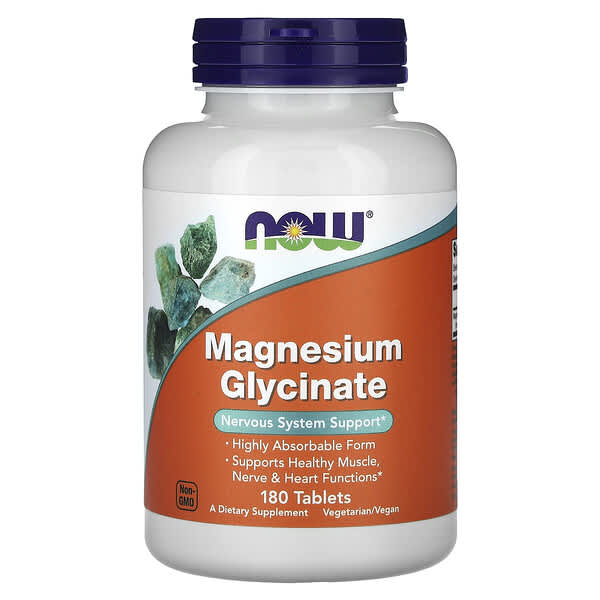
Magnesium glycinate is a form of magnesium bound to the amino acid glycine. This pairing is popular because it’s typically gentle on the stomach and commonly chosen for relaxation and sleep routines. PubChem describes magnesium glycinate as a magnesium salt of glycine used as a magnesium source in supplements.
Why it’s popular: It’s often marketed as “chelated,” implying improved tolerability compared to harsher forms (like magnesium oxide).
Features
- Amino acid–bound magnesium (glycine)
- Often sold in capsules/tablets or powder
- Frequently positioned for calming support (nighttime use)
Pros
- Usually well-tolerated for many people (less “laxative effect” than some other forms)
- Great option for evening routines, especially if you’re sensitive to GI upset
Cons
- The label “glycinate” can be misleading if the product is buffered
- Some brands use “glycinate” loosely even when it’s a blend
Pricing (Typical)
Mid-range. You can find budget options, but true fully-chelated forms often cost more than basic magnesium salts.
Best For
- People who want a gentle magnesium
- Those building a sleep + relaxation stack
- Anyone who tends to get digestive upset from magnesium citrate/oxide
Program 2: Magnesium Bisglycinate (Bisglycinate Chelate)
Overview
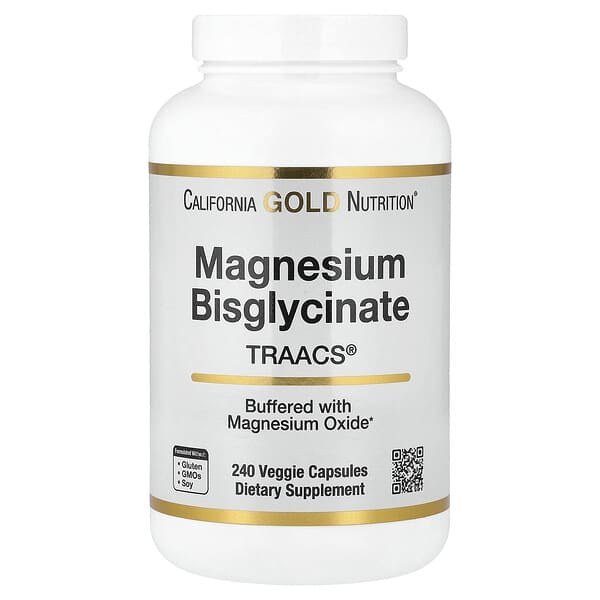
Magnesium bisglycinate is commonly described as magnesium bound to two glycine molecules in a chelated complex. Albion/Balchem (a major chelated mineral supplier) specifically describes magnesium bisglycinate chelate as a “fully reacted” amino acid chelate that binds magnesium with two glycine molecules.
In many supplement markets, bisglycinate is used to signal “this is the proper chelated glycinate form,” but real-world labeling still varies—so you still need to verify quality.
Features
- Often marketed as “fully reacted” or “true chelate”
- Sometimes carries branded verification (e.g., TRAACS® systems from Albion/Balchem)
- Generally positioned as high-tolerability + good absorption
Pros
- “Bisglycinate chelate” wording can be a hint you’re getting a true chelate (not always, but often)
- Many people choose it for calm/sleep, especially if they want a “premium” glycinate
Cons
- Some brands still sell buffered versions under “bisglycinate” wording
- Often costs more
Pricing (Typical)
Usually mid to premium, especially when branded (e.g., TRAACS®).
Best For
- People who want the highest-confidence chelated version
- Those comparing premium magnesium options for sleep/stress support
Magnesium Glycinate vs Bisglycinate: Comparison Table
| Factor | Magnesium Glycinate | Magnesium Bisglycinate |
|---|---|---|
| Are they the same? | Often yes (common name) | Often yes (more “chemical/chelate” naming) |
| What “bis-” implies | Not always specified | Typically implies 2 glycine molecules in chelate |
| Biggest buying risk | “Buffered glycinate” blends | Still possible to be buffered or unclear |
| Best label keywords | “fully chelated”, “fully reacted”, “TRAACS®”, “no oxide” | Same keywords, plus “bisglycinate chelate” |
| GI tolerance | Usually good | Usually good |
| Best use | Sleep/stress, daily magnesium | Sleep/stress, “premium chelate” seekers |
- If you’re already taking Vitamin D, magnesium can be a useful companion in your routine. Here’s our D3+K2 guide: https://suppsift.com/best-vitamin-d3-k2-iherb/
The Biggest Trap: “Buffered Magnesium Glycinate”
Here’s the part that actually changes your results.
Some products are labeled “magnesium glycinate” but are buffered, meaning they’re a mix of glycinate + magnesium oxide to raise the “elemental magnesium” number on the label (and cut cost). Multiple supplement education sources describe buffered glycinate as containing magnesium oxide and note it’s typically not the same as a 100% chelated product.
Why this matters: magnesium oxide is widely considered less absorbable than many other forms, and it’s also more likely to cause GI issues in sensitive people. Harvard’s nutrition resource notes magnesium oxide is among forms that tend to be less well absorbed compared to some other forms.
How to spot buffering (fast checklist)
Look for these on Supplement Facts / ingredients:
- “magnesium (as glycinate)” + also “magnesium (as oxide)”
- “buffered”
- unusually high elemental magnesium numbers with a surprisingly cheap price
If your goal is calm/sleep and easy digestion, buffered blends often defeat the purpose.
Dosage + Timing (Practical Guidance)
Daily magnesium needs (diet + supplements): NIH ODS lists recommended intakes (RDA) around 310–420 mg/day for adults, varying by age/sex.
Supplement upper limit (UL) warning: The NIH ODS also highlights a tolerable upper intake level of 350 mg/day from supplements for adults (this UL is specifically for supplemental magnesium, not food). Some people use higher doses under medical guidance, but self-mega-dosing is a bad plan.
Typical “real-life” routine
- Start low (example: 100–200 mg elemental magnesium/day)
- Increase gradually if needed (split doses morning + night)
- For sleep: many people prefer taking it 30–60 minutes before bed
Tip: If you get loose stools, you likely took too much, too fast, or chose a form/blend your gut doesn’t love.
Safety Notes (Don’t Skip)
- If you have kidney disease, avoid supplementing magnesium without clinician guidance (risk of magnesium buildup).
- Magnesium supplements can interact with some medications (e.g., certain antibiotics and osteoporosis meds—spacing doses is often recommended).
For general magnesium supplement guidance and safety considerations, NIH ODS is a solid reference point.
Which One Should You Buy?
Choose “Glycinate” if…
- The label clearly shows only glycinate/bisglycinate as the magnesium source (no oxide)
- You’re getting a good deal from a reputable brand
Choose “Bisglycinate Chelate” if…
- You want the highest likelihood it’s a true chelate
- You see “fully reacted” / branded chelate verification (like TRAACS® systems)
My “Best Pick” Rule
Ignore the front label hype and choose the product that:
- is unbuffered (no oxide),
- lists a clear chelated form,
- has transparent testing/quality signals.
Internal Links :
Best Magnesium on iHerb (Best Magnesium Glycinate on iHerb (2026): Top Picks for Sleep, Stress & Muscle Recovery)
Vitamin D3 + K2 Side Effects (Vitamin D3 + K2 Side Effects: Symptoms, Safety Tips & Who Should Avoid It)
Best Probiotics on iHerb (Best Probiotics on iHerb (2026): Top Picks for Gut Health, Bloating & Travel)
FAQ ?
Q1: Is magnesium glycinate the same as magnesium bisglycinate?
A: In most supplement contexts, yes—“bisglycinate” often refers to the chelated form where magnesium is bound with two glycine molecules, and “glycinate” is commonly used as the simpler name. What matters most is whether the product is fully chelated and not buffered.
Q2: What does “buffered magnesium glycinate” mean?
A: It typically means the product combines magnesium glycinate with magnesium oxide to increase elemental magnesium on the label and reduce cost. This can reduce the “gentle chelated” advantage many people want from glycinate.
Q3: Which is better for sleep—glycinate or bisglycinate?
A: If both are truly the same fully chelated form, they should perform similarly. The better choice is the one that is clearly unbuffered, well-made, and tolerated by you.
Q4: How much magnesium glycinate/bisglycinate should I take per day?
A: Needs vary. NIH ODS lists adult RDAs around 310–420 mg/day (from all sources). For supplements, the adult UL is 350 mg/day (from supplements only), unless a clinician advises otherwise.
Q5: Why does one product show “200 mg magnesium” and another shows “100 mg” even if both are glycinate?
A: Labels may list different serving sizes, different chelate concentrations, or include buffering with oxide to raise the elemental magnesium number. Always check the “Supplement Facts” panel carefully.